Assets in transition
by Alessandro Mallamaci and Armando Perna
The photographic project by Mallamaci and Perna explores the theme of assets confiscated from organised crime: illegally acquired properties permanently seized from individuals or mafia groups and transferred to the Italian State. The Rognoni–La Torre Law (1982) introduced the crime of mafia-type association and the first asset-based measures; today the Anti-Mafia Code coordinates the system of seizure, confiscation and social reuse. This final stage is the most delicate: properties are assigned to public bodies, associations or cooperatives to host collective activities, becoming places of renewal and symbols of power reclaimed from criminal organisations.
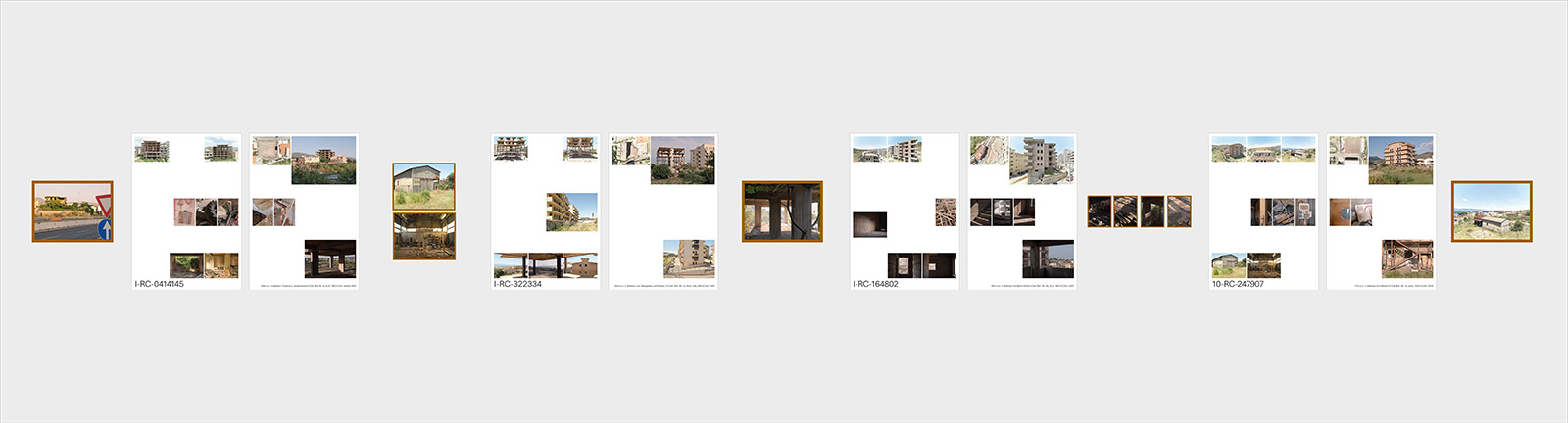
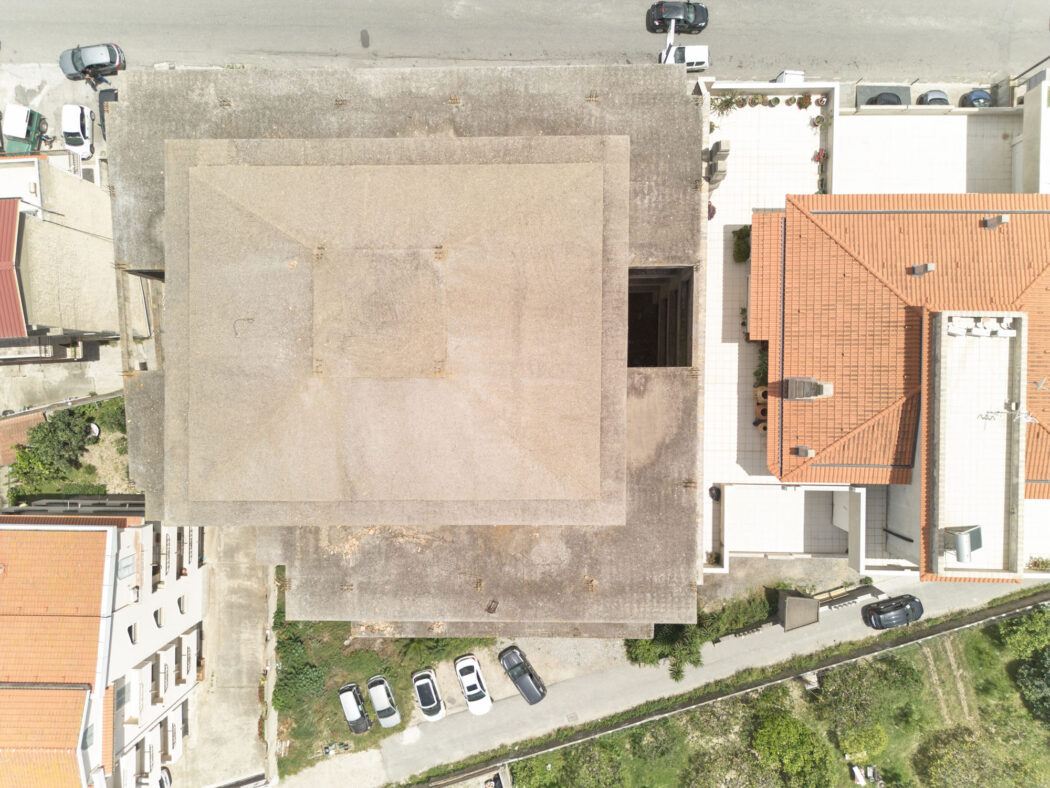
The work originates within a research project promoted by the dAeD Department of the Mediterranean University of Reggio Calabria, which launched an international open call for architects on the theme of reuse. The authors selected several buildings along the SS106 motorway, documenting them with rigour through frontal, lateral, internal and aerial views organised in a grid. Often unfinished or abandoned, these structures emerge as “works in transition”: suspended between a criminal past and the possibility of rebirth.
Calabria, Sicily and Campania are among the Italian regions with the highest number of confiscated assets, reflecting the historical presence of mafia organisations. Yet many properties lack a definitive assignment: spaces that could become civic resources remain unused, revealing the complexity of turning confiscation into true social regeneration.
Exhibition project